Easter Island, known locally as Rapa Nui, is one of the most remote inhabited locations on Earth, situated in the vast expanse of the southeastern Pacific Ocean. This tiny volcanic island is world-renowned for its nearly 900 monumental stone statues, called Moai, which were carved by the indigenous Rapa Nui people between the 13th and 16th centuries. These giant figures, some standing over 30 feet tall and weighing dozens of tons, represent the deified ancestors of the islanders and were placed on ceremonial stone platforms known as Ahu. The sheer isolation of the island—thousands of miles away from the nearest continental landmass—adds a layer of profound mystery to how such a complex society developed and flourished with extremely limited resources. For centuries, explorers and scientists have puzzled over the methods used to transport these massive stone monoliths across the island’s rugged terrain without the aid of wheels or large draft animals. Beyond the statues, the history of Rapa Nui is a gripping saga of environmental adaptation, cultural resilience, and the enduring human spirit in the face of ecological challenges. Today, Easter Island remains a powerful symbol of the heights of human creativity and a cautionary tale about the delicate balance between civilization and the natural environment.
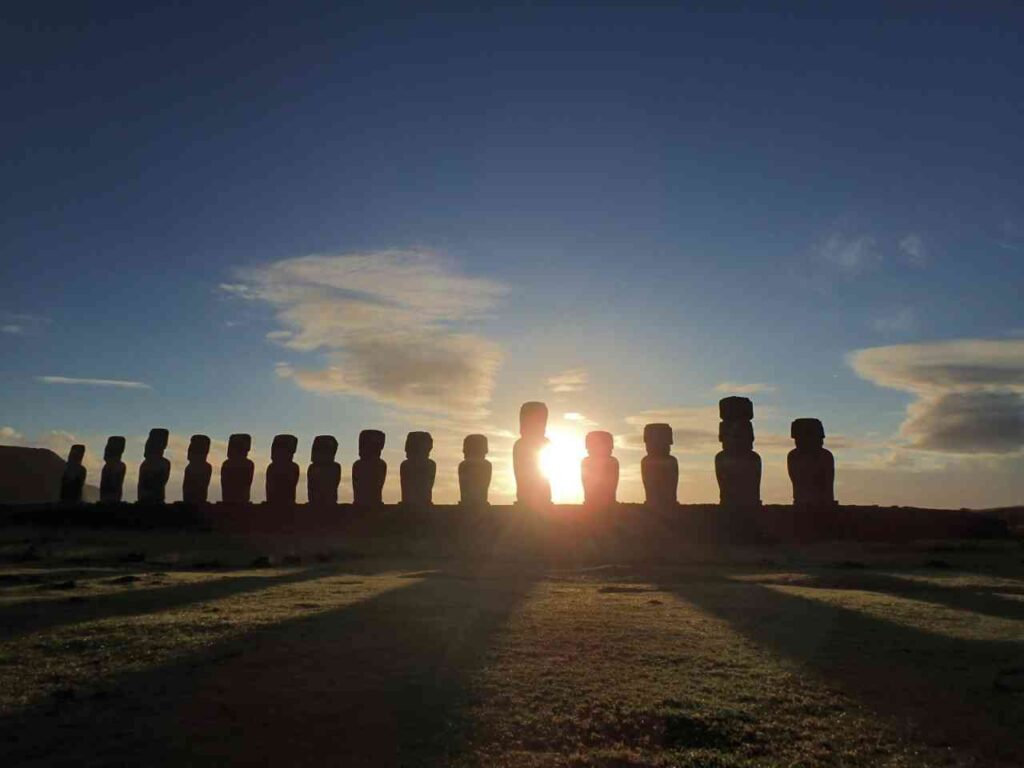
The Craftsmanship and Symbolism of the Moai The Moai are not just statues; they are a sophisticated expression of Rapa Nui’s spiritual and social hierarchy. Almost all of the statues were carved at Rano Raraku, a volcanic crater that served as the primary quarry for the island’s tuff—a compressed volcanic ash. The craftsmanship involved in carving these figures using only stone hand chisels, known as toki, is extraordinary. Each Moai features a stylized face with heavy brows, elongated ears, and a prominent nose. Many were also adorned with ‘pukao’, a hat-like cylinder made of red scoria stone, representing traditional hairstyles or headgear. Interestingly, the Moai were designed to face inland, watching over the villages and protecting the people with their ‘mana’ or spiritual power. The eyes, often inlaid with white coral and obsidian, were only added once the statue reached its final destination on the Ahu, signifying that the ancestor had finally “awakened” to guard their descendants.
The “Walking” Statues: Solving the Transportation Mystery For a long time, researchers speculated that the Rapa Nui people used wooden rollers or sleds to move the Moai, a theory that suggested massive deforestation. However, oral traditions of the islanders always maintained that the statues “walked” to their locations. Recent experimental archaeology has lent weight to this legend. Researchers have demonstrated that by using a system of three ropes and a rhythmic rocking motion, a small group of people could move a Moai in an upright position, making it appear as if it were walking. This method required precise balance and coordination, showing that the Rapa Nui were not just master carvers but also ingenious engineers. This “walking” theory also explains why many statues found along the “Moai roads” are broken or fallen; they likely toppled during transport and were left where they lay.
Ecological Adaptation and the Rongorongo Script Life on Rapa Nui required incredible resourcefulness. With no large rivers and unpredictable rainfall, the islanders developed “lithic mulching”—a technique of covering the soil with broken volcanic rocks to retain moisture, protect crops from wind, and add minerals to the earth. This allowed them to grow sweet potatoes, taro, and bananas in a challenging environment. Furthermore, Rapa Nui is home to one of the few independently developed writing systems in history: the Rongorongo script. Found on wooden tablets, these mysterious glyphs consist of human, animal, and plant motifs. Despite numerous attempts by linguists, the script remains undeciphered, guarding the deep history and genealogies of the Rapa Nui people. The existence of such a script highlights a highly organized and literate society that valued the preservation of knowledge.
Geography as a Fortress and a Prison The geography of Easter Island is dominated by three extinct volcanoes—Maunga Terevaka, Poike, and Rano Kau. This volcanic origin provided the stone for the Moai but also created a landscape with limited arable land. The island’s isolation meant that once the Rapa Nui arrived, they were essentially cut off from the rest of the world. This isolation fostered a unique culture but also made the society vulnerable. When resources became scarce due to population growth and environmental changes, the islanders could not simply migrate elsewhere. This led to a shift in social structure, evidenced by the transition from the Moai-building era to the “Birdman” (Tangata Manu) cult. This new tradition involved a dangerous annual competition to retrieve the first egg of the season from a nearby islet, shifting the focus from ancestral worship to athletic and leadership prowess.
The Lessons of Resilience and Modern Identity The story of Easter Island has often been portrayed as a “collapse,” but modern research suggests a more nuanced story of survival. Despite the introduction of foreign diseases and the tragedies of 19th-century slave raids, the Rapa Nui people and their culture persisted. Today, the island is a vibrant community where the descendants of the original carvers work to preserve their language and heritage. The Tapati Rapa Nui festival celebrates this identity through traditional sports, music, and dance. The Moai stand as silent witnesses to this journey, reminding the modern world of the importance of cultural continuity and the incredible things a small group of people can achieve when they are deeply connected to their land and history. As a UNESCO World Heritage site, the island continues to inspire visitors to think about sustainability, innovation, and the mystery of the human past.
Conclusion: A Monumental Legacy in the Pacific Easter Island remains one of the most compelling chapters in the story of human geography. It is a place where stone, sea, and spirit converge to tell a tale of monumental ambition and incredible endurance. The Moai are more than just archaeological curiosities; they are a bridge to a world that mastered its environment through faith and engineering. As we look at these weathered faces staring across the island, we are reminded that even in the most isolated corners of the globe, the human drive to create, to remember, and to protect is universal. The mystery of Rapa Nui is not just about how the statues were moved, but about how a culture found the strength to thrive in the middle of the world’s largest ocean. It is a legacy that remains etched in stone, defying the winds of time and the waves of the Pacific.