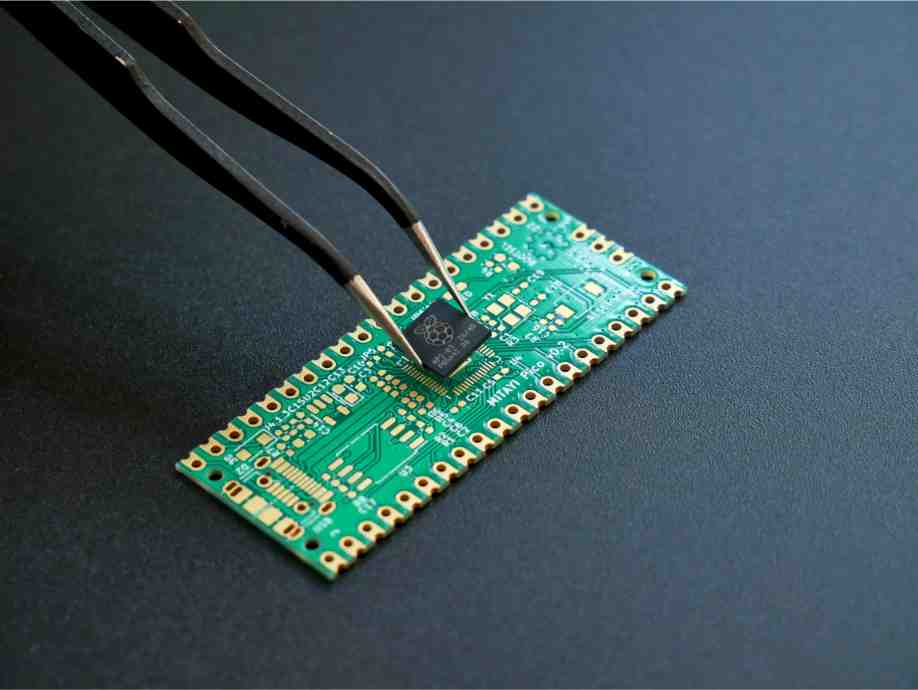
Quantum computing represents one of the most fascinating leaps in modern science, promising to redefine our relationship with technology. Unlike traditional computers that process information in bits of 0s or 1s, quantum systems utilize qubits, allowing for a level of processing power that was once thought impossible. This breakthrough is not just a marginal improvement; it is a fundamental shift in how we solve complex global challenges. From accelerating drug discovery to optimizing global logistics, the potential applications are vast and transformative. As we stand on the brink of this new era, understanding the mechanics and implications of quantum technology becomes essential for anyone looking to navigate the future digital landscape. This transition marks a departure from classical limitations, opening doors to a world where computational speed meets the intricacies of atomic physics to provide answers to humanity’s most difficult questions.

Quantum computing works on the principles of quantum mechanics, specifically superposition and entanglement. In a classical system, a bit is like a light switch—it is either on or off. However, a qubit can exist in multiple states simultaneously, a phenomenon known as superposition. This allows a quantum computer to explore millions of possibilities at once, rather than sequencing through them one by one. Imagine trying to find the exit of a maze; a classical computer would try every path individually until it finds the way out, whereas a quantum computer can traverse all paths at the exact same time. This inherent parallelism is what gives quantum technology its “superpower” status in the world of high-performance computing.
The second core principle, entanglement, is what Albert Einstein famously called “spooky action at a distance.” When two qubits become entangled, the state of one instantly influences the state of the other, regardless of the distance between them. This interconnectedness allows for highly synchronized operations and more robust data processing frameworks. Researchers are currently focusing on “Quantum Supremacy,” the point where a quantum device can perform a task that no classical supercomputer can complete in a reasonable timeframe. We are already seeing the early stages of this through experimental chips and cooling systems that keep these processors at temperatures colder than outer space to maintain stability.
In the realm of materials science and chemistry, quantum computers are set to revolutionize how we create new substances. Currently, simulating the behavior of a single complex molecule on a traditional computer takes an enormous amount of time and energy. Quantum systems can model these molecular interactions at the atomic level with perfect precision. This could lead to the development of high-efficiency batteries, new carbon-capture technologies to fight climate change, or even fertilizers that require significantly less energy to produce. The pharmaceutical industry is particularly excited about the prospect of “digital twins” for molecules, which would allow scientists to test new drugs in a virtual environment with 100% accuracy before ever beginning human trials.
Security and cryptography are other areas where technology is both a threat and a solution. Most of our current encryption methods rely on the fact that it is incredibly difficult for classical computers to factor large prime numbers. A sufficiently powerful quantum computer could potentially crack these codes in minutes. To counter this, “Post-Quantum Cryptography” is being developed to create new security protocols that are resistant to quantum attacks. This arms race between offensive and defensive tech is driving massive investment into secure communication channels, such as Quantum Key Distribution (QKD), which uses the laws of physics to ensure that any attempt to intercept data is immediately detected.
Looking ahead, the integration of quantum computing with Artificial Intelligence (AI) could be the most significant synergy in tech history. AI thrives on data and pattern recognition, but it is often limited by the processing power required to train massive neural networks. Quantum-enhanced machine learning could reduce training times from months to seconds, allowing for AI systems that can predict economic shifts, weather patterns, and even tectonic movements with unprecedented accuracy. While we are still in the “NISQ” (Noisy Intermediate-Scale Quantum) era, where errors are frequent and hardware is sensitive, the roadmap toward fault-tolerant quantum systems is becoming clearer every year. This journey from theoretical physics to practical utility is not just about faster gadgets; it is about providing the tools necessary to solve the unsolvable and build a more sustainable, advanced civilization.