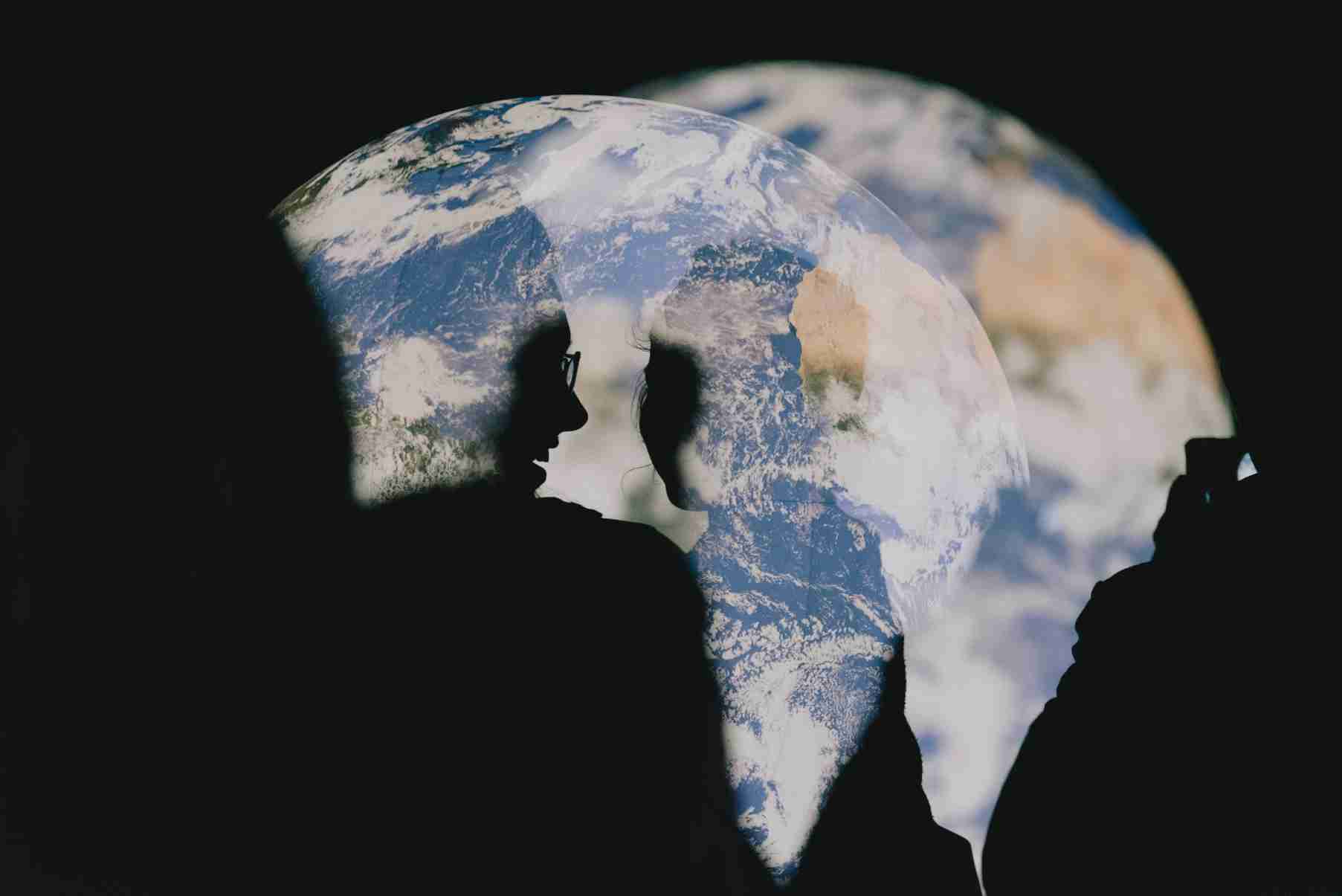
In the rapidly shifting landscape of the mid-2020s, the traditional “World-View” of economic progress is being fundamentally redefined by the concept of a Circular Knowledge Economy. This new paradigm moves away from the linear extraction of data and resources, focusing instead on a regenerative cycle of intellectual exchange that benefits the global community as a whole. As digital barriers continue to dissolve, our collective ability to share, refine, and reuse knowledge across borders has become the primary driver of sustainable development and international peace. This evolution requires a profound shift in how we perceive intellectual property and global collaboration, emphasizing that the prosperity of one region is intrinsically linked to the educational advancement of another. By fostering a world-view that treats information as a shared global asset, we can begin to bridge the long-standing intellectual divide that has historically marginalized developing nations. This introduction explores the mechanisms of this knowledge-sharing revolution and its potential to create a more equitable, innovative, and resilient future for all global citizens, ensuring that progress is measured by our collective wisdom rather than individual accumulation.

The transition to a Circular Knowledge Economy represents a monumental shift in human organization and global strategy. To fully grasp this “World-View,” we must analyze how the democratization of information, the rise of open-source diplomacy, and the integration of artificial intelligence are creating a feedback loop of global innovation. This movement is not just about sharing data; it is about building a global infrastructure where every insight contributes to a larger, self-sustaining ecosystem of human progress.
The End of Intellectual Silos and the Rise of Open-Source Diplomacy For centuries, the world-view of innovation was one of secrecy and competition, where breakthroughs were guarded as national or corporate secrets. However, the complexity of modern challenges—from climate modeling to vaccine development—has proven that silos are a hindrance to survival. Open-source diplomacy is the new standard, where governments and private entities share foundational research to accelerate solutions. This circularity means that a discovery made in a laboratory in Europe can be adapted for local use in an agricultural project in Southeast Asia, with the refinements made there being fed back into the global database. This creates a continuous improvement cycle that transcends national interests. By prioritizing the “global commons” of knowledge, we are reducing the redundant efforts that waste precious time and resources, allowing humanity to address urgent crises with unprecedented speed and efficiency.
AI as the Great Equalizer in Global Education The integration of advanced AI tools into the global education framework is perhaps the most significant catalyst for a unified world-view. AI-driven translation and tutoring systems are breaking down language barriers that once isolated entire cultures from the global discourse. A student in a remote village can now access the same high-level research as a student in a major metropolitan hub, with the content tailored to their local context and language. This is not just about passive learning; it is about active contribution. When a diverse range of perspectives enters the global knowledge pool, the quality of our collective problem-solving improves. A circular knowledge economy recognizes that unique cultural insights provide alternative solutions to problems that Western-centric models might overlook. By empowering marginalized voices through technology, we are enriching the global narrative and ensuring that the future is designed by a truly representative cross-section of humanity.
The Economics of Reusable Intellectual Capital In a traditional economy, resources are depleted as they are used. In a knowledge economy, the resource—information—actually grows in value the more it is shared and applied. This “non-rivalrous” nature of knowledge is the heart of the new world-view. However, this requires a new economic framework that rewards contributors while keeping the information accessible. We are seeing the rise of “Global Micro-Contributions,” where researchers and creators are compensated through decentralized blockchain systems for the value they add to the global pool. This ensures that the circular flow of knowledge is economically viable for everyone involved. This model encourages a shift from “competition for scarcity” to “collaboration for abundance.” As nations align their economic policies with this circular model, we see a reduction in the digital divide and a more balanced distribution of wealth based on intellectual contribution rather than physical resource possession.
Ethical Governance and Data Sovereignty A mature world-view regarding the knowledge economy must also address the ethics of data sovereignty. While the goal is a circular and open flow of information, it is essential to protect the rights of indigenous communities and individuals over their own data. The new global consensus is moving toward a “Federated Data Model,” where information can be shared for the common good without compromising the privacy or ownership rights of the source. This ethical framework ensures that the knowledge economy does not become a new form of digital colonialism. Instead, it fosters a relationship of mutual respect and benefit. By establishing clear international protocols for data ethics, we build the trust necessary for long-term global collaboration. This governance ensures that the circular economy remains transparent, accountable, and, most importantly, human-centric.
The Future: A Living Global Intelligence Looking ahead, the ultimate expression of this world-view is the creation of a “Living Global Intelligence”—a state where the collective knowledge of humanity is constantly being updated, refined, and applied to improve the quality of life everywhere. This is the final frontier of global connectivity. It moves us beyond being a collection of disparate nations toward being a single, self-aware civilization capable of managing its own destiny. As we continue to refine the mechanisms of the circular knowledge economy, we are building a legacy of wisdom that will serve as the foundation for future generations. This is a journey of continuous learning and sharing, where every individual has a role to play and every culture has a story to contribute to the grand tapestry of our shared human history. By committing to this path, we ensure that the light of knowledge reaches every corner of the globe, illuminating a future of unlimited potential and shared prosperity.