The Mariana Trench, situated in the western Pacific Ocean just east of the Mariana Islands, represents the most extreme and enigmatic geographical frontier on our planet. Formed by the violent tectonic process of subduction, where the massive Pacific Plate is forced beneath the smaller Mariana Plate, this crescent-shaped scar in the Earth’s crust plunges to a staggering depth of nearly 36,000 feet at its lowest point, known as the Challenger Deep. To put this into geographical perspective, if Mount Everest were placed into the trench, its peak would still be submerged under more than a mile of water. For centuries, this abyssal zone remained completely inaccessible to humanity, guarded by perpetual darkness, near-freezing temperatures, and a crushing atmospheric pressure that is more than a thousand times greater than that at sea level. However, modern oceanography and deep-sea exploration have begun to pierce this watery veil, revealing a surprisingly dynamic environment that challenges our fundamental understanding of geology and biology. Exploring the geography of the Mariana Trench is not just a journey into the dark abyss; it is a vital scientific quest to discover how life can adapt to the absolute limits of survival and how the hidden movements of the Earth’s mantle continue to shape the surface of our global ecosystem.
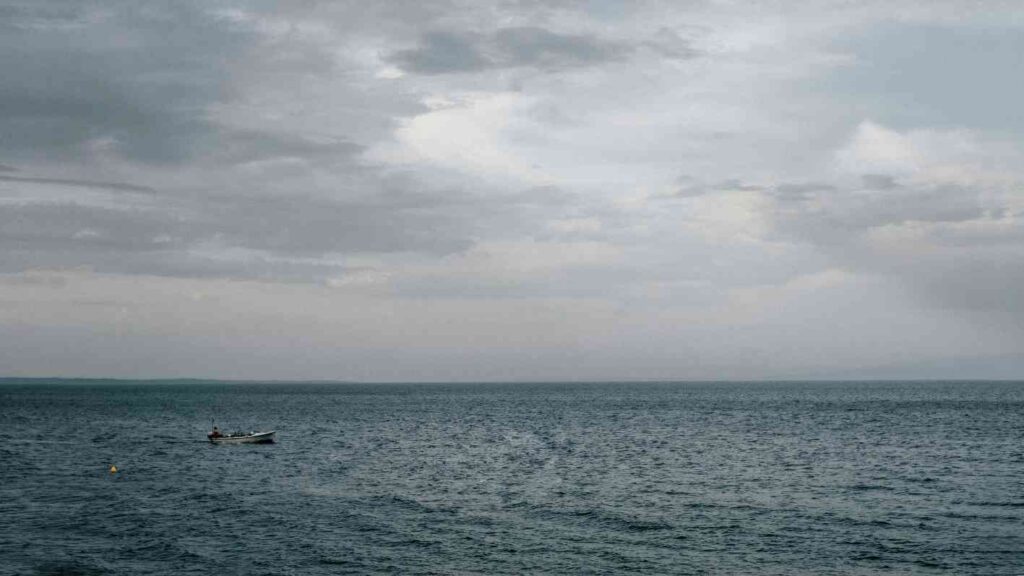
The Geological Architecture of Subduction Zones The physical geography of the Mariana Trench is a direct result of plate tectonics. The trench is approximately 2,550 kilometers long but has an average width of only 69 kilometers. It is classified as an oceanic trench, which is the deepest type of landform on Earth. The creation of the trench occurs at a convergent plate boundary. Because the Pacific Plate is older and denser than the surrounding plates, it bends and dives into the Earth’s mantle at a very steep angle. This downward bending creates the deep V-shaped depression of the trench. This geological activity makes the region a hotspot for deep-focus earthquakes and underwater volcanism. The sheer pressure and friction between these two moving slabs of crust generate immense energy, which can trigger tsunamis that impact coastal regions across the Pacific Basin. Studying the structural layout of the trench allows geologists to understand the recycling of the Earth’s crust and the mechanisms that drive continental drift.
The Extreme Physics of the Challenger Deep At the very bottom of the Mariana Trench lies the Challenger Deep, a small slot-shaped depression that represents the absolute deepest point in the world’s oceans. The environmental conditions here are hostile beyond imagination. The hydrostatic pressure reaches approximately 8 tons per square inch, which is equivalent to having an elephant standing on your thumb. At this depth, water does not freeze despite its temperature hovering between 1 and 4 degrees Celsius, because the immense pressure slightly alters the physical properties of the water molecules. Light is completely absent, as solar radiation cannot penetrate beyond the first 1,000 meters of the ocean. This zone, known as the Hadal Zone (named after Hades, the Greek god of the underworld), was long thought to be a desert devoid of all life. However, automated probes and manned submersibles have proven that even in the absolute dark under crushing weight, the geography of the ocean floor is alive with activity.
Biological Anomalies: Life at the Limits The discovery of life in the Mariana Trench has rewritten the textbooks of marine biology. Without sunlight, the creatures living here cannot rely on plants or photosynthesis for energy. Instead, many deep-sea organisms depend on “marine snow”—a continuous shower of organic material, such as dead plankton and fish, falling from the upper layers of the ocean. More surprisingly, scientists have discovered thriving ecosystems around hydrothermal vents at the bottom of the trench. These vents spew superheated water rich in minerals and toxic chemicals like hydrogen sulfide. Microscopic bacteria use a process called “chemosynthesis” to turn these chemicals into energy, forming the base of a unique food chain. Giant amphipods (shrimp-like creatures), translucent snailfish, and xenophyophores (massive single-celled organisms) have adapted to survive the pressure by developing specialized cell membranes and proteins that prevent their bodies from collapsing.
The History of Human Exploration in the Abyss Humanity’s journey to the bottom of the Mariana Trench is a story of incredible technological ambition. The first successful descent into the Challenger Deep occurred in 1960, when Swiss engineer Jacques Piccard and US Navy Lieutenant Don Walsh reached the ocean floor inside the bathyscaphe Trieste. They spent only twenty minutes at the bottom, but their feat proved that humans could safely travel to the extreme depths of the planet. For decades, the site remained unvisited until filmmaker and explorer James Cameron made a solo descent in 2012 inside the Deepsea Challenger, capturing the first high-definition footage of the abyssal plain. Today, robotic vehicles and deep-sea landers regularly visit the trench, mapping the topography with sonar and collecting soil and water samples that provide insights into the early conditions of life on Earth.
Modern Threats to the Unseen World Despite its extreme isolation and depth, the Mariana Trench is not immune to the impacts of human activity on land. Recent scientific expeditions have made alarming discoveries: plastic waste, including shopping bags and candy wrappers, has been found at the bottom of the Challenger Deep. Furthermore, analysis of the tissues of deep-sea amphipods revealed high concentrations of toxic chemical pollutants, such as PCBs, which were banned in the late 20th century but have accumulated in the deep ocean food chain over decades. Because the trench acts as a natural sink for the entire Pacific Ocean, anything that enters the water column eventually settles at the bottom. This geographical reality highlights that our global ecosystems are deeply interconnected; what we do on the surface of the earth has direct, measurable consequences for the most remote and hidden corners of our planet.
Conclusion: The Horizon of Ocean Geography The Mariana Trench stands as a powerful symbol of the mystery that still exists on our own planet. While we have mapped the surface of the Moon and Mars with incredible detail, the deep oceans remain largely unexplored territory. The trench teaches us that geography is not just about the features we can see from the surface, but about the hidden depths that drive the mechanics of our world. It is a place where geology, physics, and biology converge in the most dramatic way possible, forcing us to expand our definitions of life and environment. As technology advances and we continue to send probes into the Hadal Zone, the Mariana Trench will undoubtedly reveal more secrets about the history of the Earth and the resilience of life, serving as an eternal reminder of the vast, untamed frontiers that lie just beneath the waves.